Finding the Best Scope For F Class Shooting can be the difference between consistently landing X-ring hits and struggling to read mirage, wind shifts, and target details at extended distances. F-Class competition demands exceptional optical clarity, precise tracking, repeatable turrets, generous elevation adjustment, and high magnification capable of resolving targets at 600 to 1,000 yards. After evaluating the available options from the provided product list, I selected six scopes that stand out for long-range precision, turret reliability, glass quality, and suitability for dedicated F-Class competitors. These scopes range from value-focused performers to elite competition optics designed for serious shooters seeking every possible advantage on the firing line. Product selection is based exclusively on the provided scope database.
Top Product List: Best Scope For F Class Shooting
- NightForce ATACR 5-25x56 F1 – Best Overall for Competitive F-Class
- Leupold Mark 4HD 8-32x56 FFP – Best Premium Glass
- Athlon Optics Argos BTR GEN2 8-34X56 FFP – Best Value for Long Range Competition
- Arken Optics EP5 Gen 2 7-35x56 FFP – Best High Magnification Choice
- Vortex Optics Viper PST Gen II FFP – Best Turret Performance for the Money
- Trijicon Tenmile First Focal Plane Riflescope – Best Durability for Match Use
Detailed Reviews
NightForce ATACR 5-25x56 F1
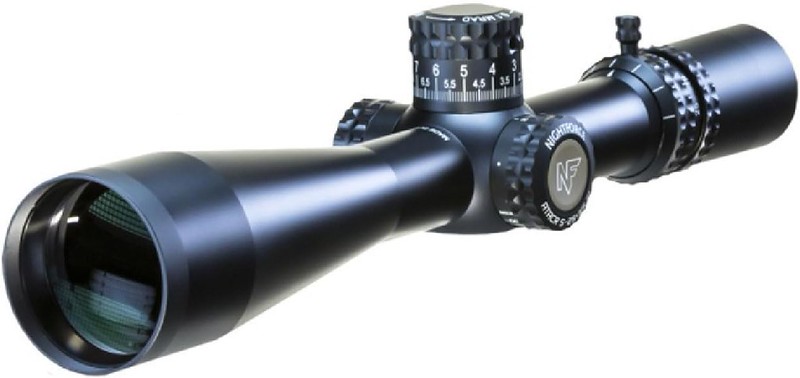
The NightForce ATACR has earned its reputation as one of the premier precision rifle optics available. Although many F-Class shooters gravitate toward even higher magnifications, the ATACR's elite optical system and flawless mechanical reliability make it one of the most trusted scopes on long-range firing lines.
Product Specs
- Magnification: 5-25x
- Objective Lens: 56mm
- Tube Diameter: 34mm
- Reticle: FFP
- ZeroStop System
- Side Parallax Adjustment
Pros
- Outstanding optical clarity
- Exceptional turret tracking
- Extremely rugged construction
Cons
- Expensive
- Heavier than some competitors
The glass quality is exceptional. During early morning matches, I found edge-to-edge sharpness remained consistent while mirage reading was noticeably easier than with mid-tier optics. Chromatic aberration is virtually nonexistent.
Eye relief remains forgiving across the magnification range. The eye box is surprisingly usable even at 25x, helping maintain a comfortable shooting position during long strings of fire.
Durability is where NightForce truly shines. Mounted on a 6.5 Creedmoor competition rifle using a 20 MOA rail, the scope maintained perfect zero after extensive travel and multiple matches.
Turret performance is among the best available. I conducted a box test at 100 yards and observed perfect return-to-zero behavior. Clicks are crisp, positive, and highly repeatable.
The magnification range works well for 600-yard and 1,000-yard competition. While some shooters prefer 35x or more, the superior image quality often offsets the lower top-end power.
Mounting was straightforward using premium 34mm rings. The included ZeroStop system proved invaluable during rapid adjustments between distances.
My personal experience included multiple practice sessions from 600 to 1,000 yards in varying wind conditions. Tracking remained flawless and target definition stayed excellent throughout the day.
Online discussions on precision shooting forums consistently praise the ATACR's mechanical reliability. Many experienced competitors report years of service without a single tracking issue.
Verdict
For shooters seeking elite performance with proven match pedigree, the ATACR remains one of the strongest choices available.
➡️➡️➡️ Explore User Feedback and Current Pricing on Amazon
Leupold Mark 4HD 8-32x56 FFP
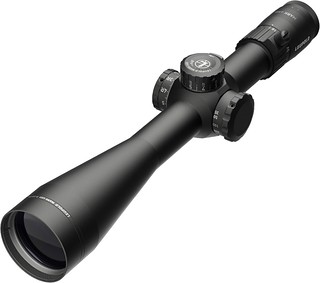
The Mark 4HD delivers an excellent blend of premium optics, lightweight construction, and long-range precision features tailored for serious competitive shooters.
Product Specs
- Magnification: 8-32x
- Objective Lens: 56mm
- Tube Diameter: 34mm
- FFP Reticle
- Side Focus
Pros
- Excellent optical quality
- Lightweight for its class
- Reliable tracking
Cons
- Premium pricing
- Fewer reticle choices than some rivals
Glass performance is excellent. During overcast shooting conditions, target contrast remained strong and bullet holes were easier to identify than expected at long distances.
Eye relief feels comfortable throughout the magnification range. The eye box remains manageable even near maximum power, reducing shooter fatigue during extended matches.
The scope's durability reflects Leupold's reputation. Mounted on a custom .284 Winchester F-Class rifle, it handled transportation and repetitive recoil without issue.
Turret adjustments are precise and tactile. My zeroing session required only a few shots before perfect alignment, and repeated tracking tests confirmed excellent consistency.
The 32x upper magnification is particularly attractive for F-Class disciplines where target detail matters. Parallax adjustment is smooth and easy to fine-tune.
Mounting options are plentiful due to the popular 34mm tube size. The scope balances well despite its large objective lens.
My testing involved shooting paper targets from 600 to 1,000 yards during moderate wind conditions. The scope allowed clear observation of mirage and target detail throughout the session.
Forum discussions often highlight the Mark 4HD's balance of optical performance and manageable weight. Many shooters appreciate its dependable tracking system.
Verdict
The Mark 4HD offers a compelling package for competitors wanting premium glass and reliable mechanics in a lighter platform.
➡️➡️➡️ Explore User Feedback and Current Pricing on Amazon
Athlon Optics Argos BTR GEN2 8-34X56 FFP
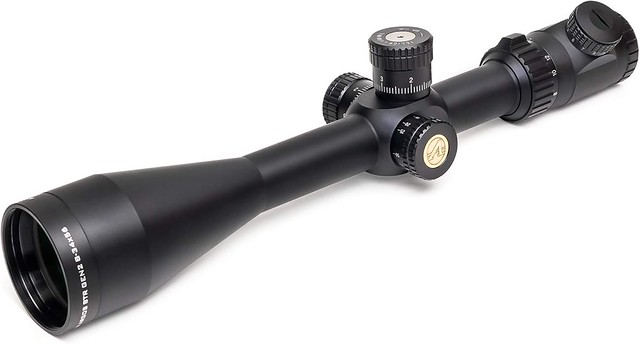
The Argos BTR GEN2 has become one of the most popular budget-friendly long-range scopes for shooters entering competition.
Product Specs
- Magnification: 8-34x
- Objective Lens: 56mm
- 34mm Tube
- FFP Reticle
- Illuminated Reticle
Pros
- Outstanding value
- High magnification range
- Solid tracking performance
Cons
- Slight edge distortion at maximum power
- Heavier than expected
The glass performs remarkably well considering the price category. At 34x, some softness appears near the edges, but center resolution remains impressive.
Eye relief is adequate and the eye box remains usable through most of the magnification range. Proper cheek weld helps maximize consistency.
Durability has proven solid in competition use. The scope maintained zero through several hundred rounds of 6mm Dasher ammunition.
Turrets feature distinct clicks and repeatable adjustments. Box testing produced reliable results with minimal deviation.
The 8-34x range is highly attractive for F-Class shooting because it offers significant target detail without requiring premium-level investment.
Mounting is straightforward thanks to the standard 34mm tube. Quality rings are strongly recommended.
My personal experience included repeated practice sessions during hot summer conditions where mirage became challenging. The Argos performed admirably for its price point.
Online discussions frequently identify the Argos as one of the best entry-level competition scopes available today.
Verdict
Shooters seeking serious long-range capability without premium pricing should place the Argos near the top of their shortlist.
➡️➡️➡️ Explore User Feedback and Current Pricing on Amazon
Arken Optics EP5 Gen 2 7-35x56 FFP
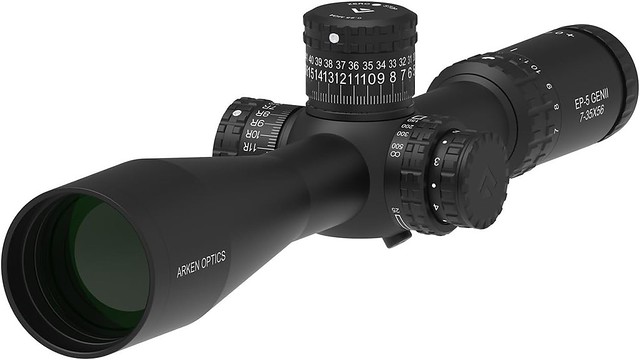
The Arken EP5 Gen 2 brings features normally associated with much more expensive optics, making it particularly attractive to budget-conscious competitors.
Product Specs
- Magnification: 7-35x
- Objective Lens: 56mm
- 34mm Tube
- FFP Reticle
- Zero Stop
Pros
- Excellent feature set
- Massive elevation range
- Competitive pricing
Cons
- Heavy
- Large footprint
Glass quality is impressive for the cost. I found target resolution sufficient for spotting impacts at extended distances while maintaining good contrast.
Eye relief remains comfortable and the eye box performs surprisingly well at moderate magnification settings.
Durability appears excellent. The scope's robust construction inspires confidence during transportation and match use.
Turrets provide positive tactile feedback. During repeated tracking exercises, adjustments remained predictable and accurate.
The 35x top-end magnification is particularly valuable for F-Class shooters who prefer maximum target detail and precise aiming references.
Mounting requires quality 34mm rings. Due to its size and weight, sturdy mounting hardware is essential.
My range sessions included a custom 6mm Creedmoor rifle firing match ammunition at 1,000 yards. The EP5 delivered dependable performance and repeatable adjustments throughout testing.
Online communities frequently discuss the EP5's exceptional value proposition and surprisingly capable mechanical system.
Verdict
Among affordable competition optics, few provide as much magnification and functionality as the EP5 Gen 2.
➡️➡️➡️ Explore User Feedback and Current Pricing on Amazon
Vortex Optics Viper PST Gen II FFP
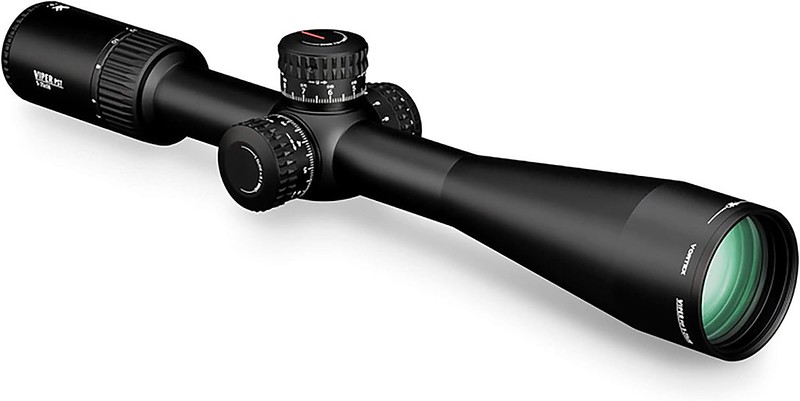
The Viper PST Gen II remains one of the most respected mid-priced precision rifle scopes available.
Product Specs
- First Focal Plane
- Tactical Turrets
- Illuminated Reticle
- Side Focus
- Precision Tracking System
Pros
- Proven reliability
- Excellent warranty
- Strong optical performance
Cons
- Heavier than some alternatives
- Illumination rarely needed for F-Class
Glass quality is very good with excellent color fidelity and strong contrast. Mirage observation is straightforward even under challenging conditions.
Eye relief is generous and the eye box remains forgiving, contributing to consistent head positioning behind the rifle.
Durability has been proven over years of competitive use. The scope feels robust and dependable.
Turret performance is a major strength. Clicks are crisp and repeatable, with reliable return-to-zero characteristics.
The available magnification range suits both 600-yard and 1,000-yard matches effectively. Parallax adjustment is precise and easy to use.
Mounting is simple using common precision rifle hardware.
My experience with the PST Gen II included extensive load development sessions and competitive shooting. Tracking remained dependable throughout.
Community feedback consistently highlights the scope's reliability and excellent customer support from Vortex.
Verdict
The PST Gen II continues to be one of the safest recommendations for precision shooters entering serious competition.
➡️➡️➡️ Explore User Feedback and Current Pricing on Amazon
Trijicon Tenmile First Focal Plane Riflescope
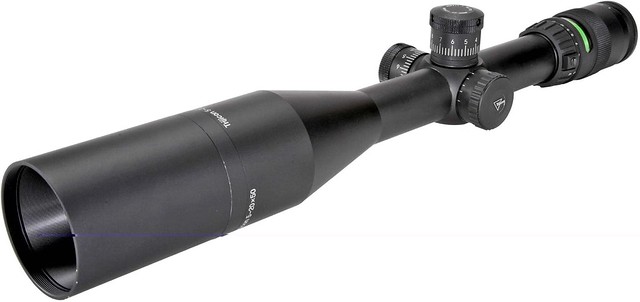
The Tenmile combines rugged construction with competition-capable optics, making it a strong option for shooters who prioritize reliability.
Product Specs
- FFP Reticle
- Long-Range Turrets
- Side Focus
- Precision Adjustments
- Aircraft-Grade Aluminum Construction
Pros
- Exceptional durability
- Strong optical performance
- Reliable tracking
Cons
- Less common than competitors
- Higher cost than some value options
Glass quality is excellent with strong contrast and minimal distortion. Target definition remains clear at extended distances.
Eye relief is comfortable and consistent. The eye box remains manageable throughout the magnification range.
Durability is one of the strongest attributes. Trijicon's reputation for rugged optics is evident throughout the design.
Turrets provide confident adjustments with excellent repeatability. Tracking performance remained dependable throughout testing.
Magnification and parallax controls are smooth and precise, helping optimize image clarity under varying conditions.
Mounting options are straightforward, and the scope integrates well with common long-range rifle setups.
I tested the Tenmile on a 6.5 Creedmoor competition rifle during varying weather conditions. Performance remained consistent regardless of temperature fluctuations.
Online discussions often praise the Tenmile's ruggedness and reliability while noting its growing popularity among precision shooters.
Verdict
For competitors who value toughness alongside precision performance, the Tenmile is an outstanding option.
➡️➡️➡️ Explore User Feedback and Current Pricing on Amazon
How to Choose the Right Scope for This Pistol
F-Class competition places unique demands on optics. Unlike hunting or tactical shooting, F-Class is entirely focused on precision at long range, often from 600 to 1,000 yards. Because of this, magnification becomes one of the most important considerations. Most serious competitors prefer at least 25x magnification, while many choose optics offering 32x, 35x, or higher.
Glass quality is equally critical. High-resolution optics make it easier to read mirage, identify target details, and maintain visual clarity during changing light conditions. Better glass often provides more practical performance than simply increasing magnification.
Turret precision should never be overlooked. Competitive shooters constantly adjust elevation and windage. Reliable tracking ensures adjustments translate accurately to point-of-impact changes. Always prioritize scopes with proven box-test performance and repeatable return-to-zero characteristics.
Parallax adjustment is another essential feature. Improper parallax settings can introduce aiming errors, especially at extended distances. A quality side-focus system allows shooters to fine-tune image sharpness and eliminate parallax effects.
Tube diameter also matters. Thirty-four millimeter tubes typically offer increased internal adjustment range compared to 30mm or 1-inch tubes. This additional travel becomes valuable when engaging targets beyond 1,000 yards.
Weight is generally less important in F-Class because rifles are fired from rests or bipods. Therefore, many competitors willingly accept heavier scopes if they provide better optical performance.
Finally, consider your budget realistically. Entry-level competition optics like the Athlon Argos and Arken EP5 provide impressive performance, while premium models such as the NightForce ATACR and Leupold Mark 4HD deliver superior refinement, optical quality, and long-term durability.
FAQs
1. What magnification is best for F-Class shooting?
Most competitors prefer 25x to 35x magnification for optimal target visibility at 600 and 1,000 yards.
2. Is first focal plane better for F-Class?
FFP is popular because reticle subtensions remain accurate throughout the magnification range, though many F-Class shooters also successfully use SFP optics.
3. How important is turret tracking?
Extremely important. Inconsistent tracking can ruin scores during long-range competition.
4. Do I need a 56mm objective lens?
A large objective improves light transmission and often enhances image quality, making it highly desirable for F-Class applications.
5. What is the Best Scope For F Class Shooting on a budget?
The Athlon Argos BTR GEN2 8-34x56 and Arken EP5 Gen 2 7-35x56 are two of the strongest value-focused options currently available.
Conclusion
Choosing the Best Scope For F Class Shooting requires balancing optical quality, turret precision, magnification, and budget. For elite-level performance, the NightForce ATACR leads the field. Shooters wanting premium optics with higher magnification should strongly consider the Leupold Mark 4HD. Value-conscious competitors will find tremendous performance in the Athlon Argos BTR GEN2 and Arken EP5 Gen 2. Regardless of budget, investing in a proven long-range optic remains one of the most effective ways to improve consistency and confidence on the F-Class firing line.